Astronomy is Not About Stars

The night sky: it’s a theme here.

I wanted to share a little research paper I put together for an English class I had recently taken. This paper catapulted me back into a love for writing, and pushed me even deeper into my love for the night sky.

I hope you’ll be inspired to look up more often and wonder at the wonder of it all.
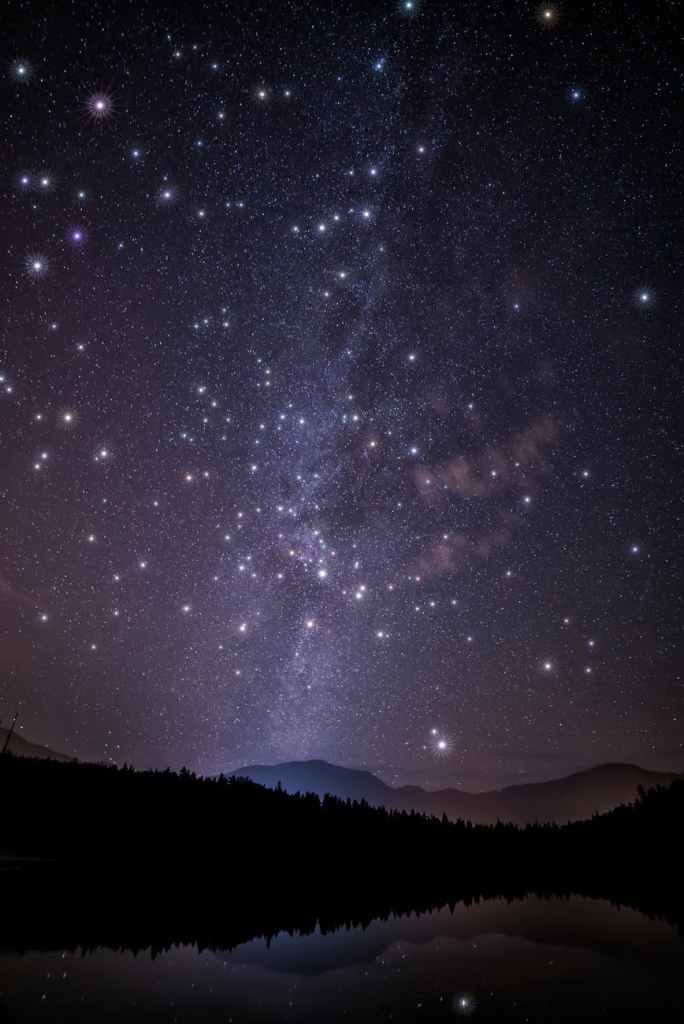
Photo by James Wheeler on Pexels.com

Tell anyone that you are interested in astronomy, and you will very quickly be written off as someone who is too nerdy and not much fun. The word astronomy implies a deep knowledge of difficult maths, physics, and telescope specs not very many would willingly impose on themselves. Astronomy is also very often confused with it’s scientific imposter Astrology, the study that assumes and attempts to interpret the influence of the heavenly bodies on human affairs. Luckily, the dictionary also states that, as a science, Astrology is obsolete, but still many more people are willing to discuss horoscopes and the “predictions” of love and happiness that are written in the stars rather than the fascinating facts about the stars themselves.

Being the world’s oldest science (University of Oregon, 2018), astronomy and astrology were once one and the same. For the greater part of history, only the wealthy could afford to be educated in the sciences, thus leaving the subject in the hands of noble courts and religious institutions, which had derived for themselves religious implications, navigational and practical applications, and a whole mix of superstitions. But now, in the 21st century, with the advancements we have made in thought and discovery, what can the stars tell us? How important is it that we look to them, objects so far away, while we have so many issues here at home, around our very own little star? Luckily for us, we have centuries of knowledge, difficult maths and physics all figured out, and available for us to view online through our laptops, an invention born out of studying the stars (Rosenberg, Russo, Bladon, & Christensen, 2014). But perhaps the most powerful thing that the study of the stars has given us, even more than day to day applications of medicine, navigation, and technology, studying the stars has let us in on a little secret with profound implications: the story of the stars is not a story about stars at all, it’s actually the story of life- the story of us.      

The night sky has long fascinated the simple and the scholarly. A recent study of European cave art finds that depictions of animals are actually primitive zodiac symbols, some of which are still used today, suggesting that as early as 40,000 years ago, humans were already aware of how to use the stars to record dates of significant events. Though these cave drawings are found in different locations across Europe and span several thousand years, they all use a similar dating method based on a sophisticated understanding of astronomy. There is even a recording of a meteor strike around 15,150 ± 200 BC, which closely corresponds to a climate event recorded in an ice core in Greenland (Sweatman & Coombs, 2018). The study also suggests that the ancient peoples understood the equinoxes, “which occur due to the gradual shift of Earth’s rotational axis on its orbital path”, a discovery usually credited to the Greek Hipparchus around 129 BC, some 15,000 years later (Nguyen, 2018). The Native Americans accurately recorded a supernova explosion which we now know was responsible for the Crab Nebula. They left us a petroglyph of it, a rock drawing, in 1009 AD (University of Oregon, 2018). It is quite moving that the human need to record important dates and events unites us modern people with those from thousands of millennia ago. Just like we take a photo on our phones, or jot a thought into a notebook, they used some pigment, and wrote on cave walls or rocks.

Every people group has developed some kind of cosmology, or explanation for the universe and why it is the way it is. Usually tied in with superstition and religious deities, the ideas ancient cultures had about cosmology were quite imaginative. They sought to explain the origin, structure, and driving force behind the universe (Broadie & Macdonald, 1978). The earliest cosmologies were very magical, or anthropomorphic, the universe was alive, and by giving sacrifices to appease the spirits, humans believed they could sway the unpredictable, all-powerful forces of nature in their favor. They made lunar calendars, built megalithic (big stone) structures, and invested resources to express their ideas about the cosmos. Interestingly, they all came to very similar ideas about the cosmos and our place within it, despite never coming into contact with each other. Mythical cosmology followed (University of Oregon, 2018).
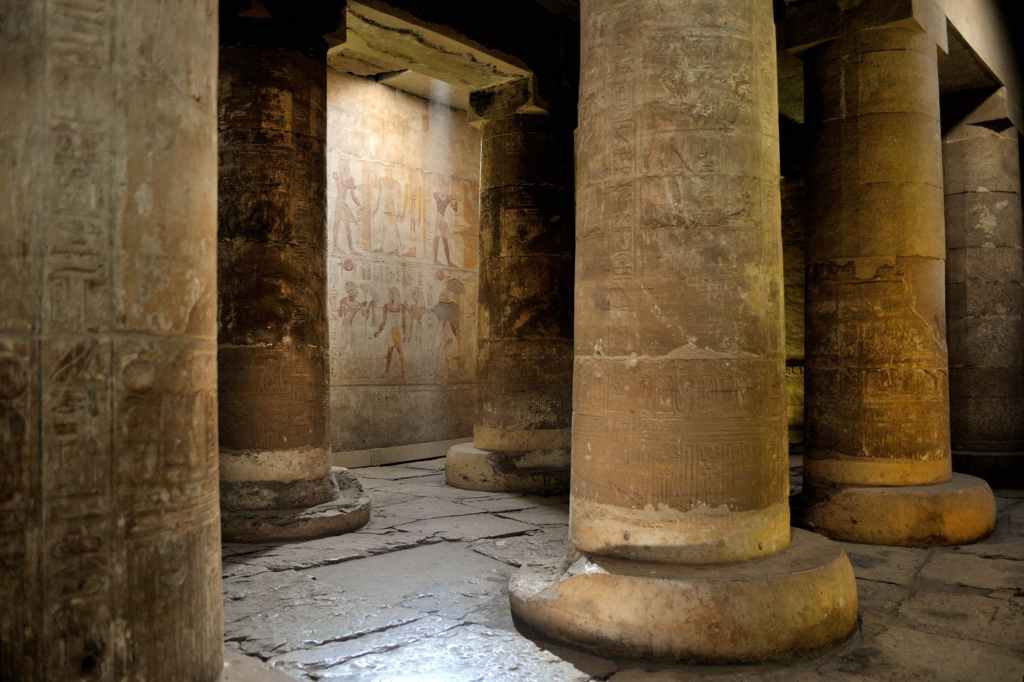
In an ancient context, the word myth has a positive connotation. It simply refers to the best current explanation for the world around us, so while myths may be off factually, the truth was often hidden in the essence of the myth itself, in its moral. Though rampant with gods and personifications, myths were, in a very broad sense, the earliest forms of scientific theories. During the bronze age, along with the development of culture, early Egyptian and Mesopotamian cosmology gave rise to a more formalized religion;  

Since its principal deities were heavenly bodies, a great deal of effort was made by the priesthood to calculate and predict the time and place of their god’s appearances. These skills led to the division of the day and night into 12 sections each, the development of a lunar calendar, and the development of a solar calendar of 12 30-day months with a special 5-day unit to bring the total to 365 days (University of Oregon, 2018).

Similarly, the Babylonians are credited with detailed and continuous astronomical records, dating back to 800 BC, making them the oldest scientific documents to date. They also invented a few very useful arithmetic tools to help with their predictions and observations. “The purpose of this activity was clearly astrological with the aim of forecasting the fortunes of the country as well as of the king (University of Oregon, 2018).” Ancient China was the first to accurately map the stars above its lands. In 1900, a Taoist priest stumbled upon a hidden library inside of a cave, which had been sealed by Buddhist monks in the 11th century. Among the 40,000 manuscripts was a 4-meter-long scroll which contained the drawing of the entire sky as visible from China, expertly penned by hand with black and red inks. This document, named the Dunhuang Star Chart, was dated to have been made between 649 and 684 AD, while it has no coordinate grid and shares wording with an earlier work from about 300 AD, the Dunhuang Star Chart is the earliest-surviving star chart of the entire northern sky (Qiu, 2009). Around the same time the star chart was created, the Arabic world saw its golden age for science. Spherical trigonometry and algebra were developed to help with accuracy of recording the positions of celestial bodies. In 964 AD, Abd al-Rahman al-Sufi first observed the large Magellanic Cloud and our neighbor galaxy Andromeda (Stirone, 2017), and Abū Ali al-Ḥasan Ibn al-Haytham al-Baṣrī was first to suggest the need to test theories and not just accept them as true on the words of others or on observations alone. He wrote:

A person who studies scientific books with a view to knowing the truth, ought to turn himself into a hostile critic of everything that he studies … if he takes this course, the truth will be revealed to him and the flaws…in the writings of his predecessors will stand out clearly. (Unesco, 2016)

The Royal Society, a modern fellowship of scientists -founded in 1660- echo this very thought in their motto, “Nullius in verba” meaning “take nobody’s word for it” (The Royal Society, 2019). Another notable scientist of the time was a woman named Fatima al-Fihri. Built in Fez, Morocco in 859 AD, and still functioning to this day, it was the first university in the world. Jewish, Muslim, and Christian scholars came from all over to study philosophy, mathematics, language, and astronomy (Stirone, 2017). There is definitely something to be said about the power of humanity’s common sense of wonder working together to answer the questions that we all ask, regardless of our religious backgrounds: why is there something instead of nothing, and what is that something made of?

Enter: Math.

Equally puzzling as it is stunning, math is actually a language, and it helped us understand the universe. Due largely in part to the foundations laid by Greek thinkers like Plato, Pythagoras, and Ptolemy, our understanding continues to grow, and is still best explained by numbers, not words. Two schools of thought dominated the Greek philosophical stage: Platonism and instrumentalism. Platonism stated that the physical world is just a shadow – a representation- of the real world, which consists of pure mathematics, concluding that mathematics was discovered. On the contrary, Aristotle argued for instrumentalism, stating that mathematics was a human invention born out of idealizing and abstracting the true physical world.

Which one of them was right, we may never know, but the fact remains: “mathematics is the chief source of the belief in eternal and exact truth, as well as a sensible intelligible world (University of Oregon, 2018).” Guided by this principle, we are catapulted into the modern scientific age, making discovery after discovery. Copernicus, Galileo, Newton, Einstein, Hawking, Kepler, Hubble, and many more brilliant men and women, fueled by an insatiable curiosity, challenged thought and gave us a cosmology we could have never imagined. To name a few, we have: the theory of gravity, understanding of spacetime, quantum physics, quantum mechanics, the big bang theory, and yet we are only scratching the surface, immediately realizing that the more we know, the more we find out how much we don’t know. Neil deGrasse Tyson, a popular science communicator and accomplished astrophysicist shared this sentiment in a conversation with Stephen Colbert. He said;

We don’t understand the origin of 85% of all of the gravity of the universe. It’s not black holes, it’s not comets, stars, planets, none of the above.’ ‘So the math says there should be more there, but we just can’t see it?’[Colbert] ‘Right, so it’s gravity with no known source…Then -then- there’s some mysterious pressure in the vacuum of space that is forcing the universe to accelerate in its expansion…so this dark energy, in the future, will render the universe so large, having accelerated so significantly, that all of the galaxies of the night sky will have accelerated beyond our horizon[field of view of the observable universe], and all the galaxies are the source of all of our knowledge of cosmology, the big bang, everything we know about the history of the universe comes to us from these galaxies. If they accelerate beyond our horizon, the next generation of cosmic explorers will only have the stars of the Milky Way to think about…there would have been an entire chapter of the universe ripped from their view…so I lose sleep wondering today, was there a previous chapter ripped from the universe itself? And here we are, touching the elephant not knowing that, in fact, there is an elephant standing there…we don’t know what we don’t know… (The Late Show with Stephen Colbert, 2018)

            And while there is still so much left to discover, what we do know has given us a remarkable picture of our past, as well as a glimpse into the future of our universe, as dark and star-less as it may be. It all began some 13.8 billion years ago, when something came out of nothing. Weather it truly was nothing is debated to no end, but what we can say for certain is that something happened in the vast void of the unknown, something so spectacular that it’s afterglow can be heard and seen to this day: the background microwave radiation. One simply needs to turn on the TV or radio to some static, and there it is, a tiny percentage of all static is actually radio magnetic radiation left over from the cosmic creation event (Bryson, 2004).
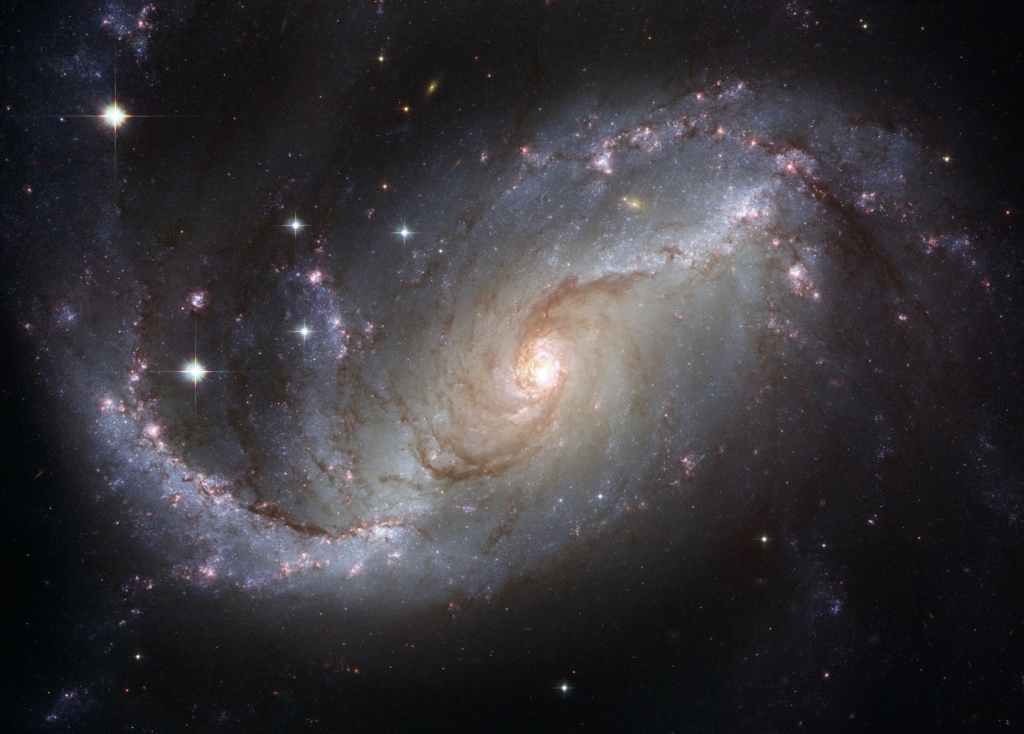
The Big Bang created all of the atoms and energy that the universe will ever use, meaning, the same atoms that make us today, were all here since the beginning of time. When the universe was very young, it was hot and dense, in a plasma-like state. It went through a rapid inflation period, which stretched the fabric of spacetime, and effectively caused the plasma to cool. This happened at such a perfect rate, that it allowed for the right conditions for the formation of elements: hydrogen and helium, with trace amounts of lithium and beryllium (New Zealand Government, 2019). This process of element formation continued until there was enough mass to form stars. Stars lit up across the universe, and in time, exploded into spectacular supernova, creating the extreme temperatures needed for the synthesis of elements heavier than iron, like gold and uranium. The explosions then spewed the elemental building blocks of life into the cosmos, allowing for them to collect into clouds of gas and dust, to repeat the process all over again (University of Oregon, 2018).

It is because of these explosions that we are here today. The atoms that make each one of us have been recycled from star to star, until they eventually came together to make each individual person that ever lived, in a combination of atoms that never existed before, and never will again (Bryson, 2004). “We are literally the ashes of long dead stars. When you buy a party balloon that floats in air, it is filled with helium gas – most of which was created when the universe was only 3 minutes old (New Zealand Government, 2019)!”

Photo by Pixabay on Pexels.com
Bae, AKA Earth

It is very humbling to study cosmology and see all the events leading up to our existence unfolding in an almost perfect trajectory. The Big Bang producing the right amount of atoms, the universe expanding at a rate that allowed the formation of elements, our Earth being in the “Goldilocks zone” where it’s not too hot and not too cold, it’s just right for life to thrive. Even the dinosaurs going extinct meant that the smaller animals who survived the asteroid strike had a fighting chance at life, giving rise to mammals, who eventually evolved into the creatures who are able to ask about and ponder these very things: humans.

Despite the plethora of myths, cosmologies, and other things that divide the human race, we are all essentially the universe. On a cosmic scale, we have far more that unites us than that which separates us. Our shared material ancestry tells a story of beauty and unity, while anthropologically, our physical differences serve as a reminder of how creative, and adaptive we can be for a chance at life. Studying the stars leads us to a sense of wonder, a sense of smallness yet importance. Once the Earth was stable enough, life arose relatively quickly, however it is the only place housing life we know of thus far, making it remarkably rare and precious. It’s astounding that something as cut and dry as math and physics could tell us something so deep and integral to the human experience. It has been said that mathematics is the language in which God wrote the universe, and while that may or may not be true, the universe definitely has something to tell us, we just need to look.

References:

Broadie, A., & Macdonald, J. (1978). The Concept of Cosmic Order in Ancient Egypt in Dynastic and Roman Times. L’antiquite classique, 47(1), 106-128. https://doi.org/10.3406/antiq.1978.1885

Bryson, B. (2004). A Short History of Nearly Everything. New York, NY: Broadway books.

New Zealand Government. (2019). Science Learning Hub. Retrieved November 27, 2019, from https://www.sciencelearn.org.nz/resources/1727-how-elements-are-formed

Nguyen, J. (2018, December 20). Business Insider. Retrieved November 27, 2019, from https://www.businessinsider.com/ancient-cave-drawings-are-constellations-of-stars-2018-12

Qui, J. (2009). Charting the heavens from China. Nature, 459, 778-779.

Rosenberg, M., Russo, P., Bladon, G. & Christensen, L.L. (2014). Astronomy in Everyday Life. CAPjournal, 14, 30-35. Retrieved https://www.iau.org/public/themes/astronomy_in_everyday_life/

Stirone, S. (2017, February 14). Astronomy. Retrieved November 27, 2019, from https://astronomy.com/news/2017/02/muslim-contributions-to-astronomy

Sweatman, M. B., & Coombs, A. (2018). Decoding European Palaeolithic Art: Extremely Ancient knowledge of Precession of the Equinoxes. Athens Journal of History, 5(1), 1-30. doi: doi=10.30958/ajhis.5-1-1

The Late Show with Stephen Colbert. (2018, January 6). The Mystery That Keeps Neil deGrasse Tyson Up At Night [Video file]. Retrieved from https://www.youtube.com/watch?v=TgA2y-Bgi3c

The Royal Society. (2019). History of the Royal Society. Retrieved from https://royalsociety.org/about-us/history/

Unesco. (2016, February 4). S. M. Razaullah Ansari: Ibn al-Haytham’s scientific method. Retrieved November 25, 2019, from https://en.unesco.org/news/sm-razaullah-ansari-ibn-al-haytham-s-scientific-method

University of Oregon. (2018). Astronomy 123: Galaxies and the Expanding Universe. In Ancient Cosmology. Retrieved December 8, 2019, from http://abyss.uoregon.edu/~js/ast123/lectures/lec01.html

University of Oregon. (2018). Astronomy 123: Galaxies and the Expanding Universe. In Medieval Cosmology. Retrieved December 8, 2019, from  http://abyss.uoregon.edu/~js/ast123/lectures/lec02.html

University of Oregon. (2018). Astronomy 123: Galaxies and the Expanding Universe. In Nucleosynthesis. Retrieved December 8, 2019, from http://abyss.uoregon.edu/~js/ast123/lectures/lec21.html           
I Wrote Me A Little Poem

Kristy wrote a little poem, little poem, little poem
Kristy wrote a little poem, and now you’re automatically singing Mary had a little lamb, aren’t you?

I just had a random stroke of.. stroke- as you can see, the stroke is abandoning my imagination now and I cannot figure out what to call the stroke, as it’s not really a stroke of genius, but also not like a medical stroke, thank God for that.

When I was growing up. I had to recite a lot of poems for church. I hated poems. I don’t know why they are such a big thing in the Slavic tradition that I come from, as I have never encountered the regular recital of poetry in any other formal religious setting.

I can see it now: me and a few girls from my youth group scrambling before the service to write out a program.

It would usually look like this:
Prayer
Congregation sings
Youth choir
Sermon 1
Choir
Poem
Song
Sermon 2
Song
Poem
Choir
Poem
Song
Sermon 3
Choir
Song
Closing Prayer

Yes, 3 sermons. This was the structure of most services, though sometimes there would be one less sermon(best day ever) or it would just be a lot of songs, with no poems to break up the music, also not a bad day.

I find it highly ironic, now that I’m writing a poem, because of my dislike of poetry. I think it is because i associate poems with church, which translates to spiritual poems. Spiritual poems aren’t bad, but there are a lot of bad poems that are spiritual, and given the rate at which I heard poems, I can tell you that I’ve heard a lot, and not all of them were great. I remember so many would have just a slight- teeny tiny- thread of negativity. It was subtle, but enough to evoke a feeling of discomfort, perhaps even guilt. I know poetry should evoke feelings or at least thoughts, but not in a consistent make-you-feel-kinda-bad-about-yourself way, at least that’s not how I like my poetry.

Example: I was given a poem to learn for a service. The theme for the service was “Gratitude”, so my poem was about the Russian word for thank you “spacibo”, which apparently was derived from “spaci(to save)” and “Bog(God)” literally translating to “God save you.” In the opening line, it goes like this: “A simple and good word “Thank you”, how could you not like this word? It once used to mean “may God save you”, but people were quick to forget that.”

Did you catch it? There’s a subtle implication of malice on the part of those who speak the language and adapt words in an ever changing environment, how dare they? So for this reason, and a few others, I really dislike a lot of the poems recited in church. Were there good poems? Definitely. Did people enjoy them? Most likely. Is it something that could be done away with? Also most likely yes.

Are my reasons good enough to write off a whole integral part of a Slavic Baptist worship service? Maybe yes, maybe no, but I think we will never know.

Now that you have this context, maybe it’s a bit more clear why I find my sudden poetic streak rather ironic. The meter is a bit off (you have to emphasize “he” in the fourth line in order to have good flow) but nonetheless, it happened, and perhaps you’ll enjoy it.

Let me know what you think. It’s cutesy, simple, and sweet, so the intended audience is likely to be kids and kids at heart.

The Great Big Story
In the beginning, God created everything
The earths[planets], the suns, the seas
He made bacteria, the dinosaurs, the mammoths, and the trees
He loves his creation, and that is clear to see
As he gave sapiens a mind to think, and know, and feel, and be
He left a lot of clues for scientists to find
To figure out just how it’s made, to get into his mind
And as we study more and more, the bigger our God gets
For there is so much left to learn and much to keep us guessing
The universe reveals his power- black holes are glorious things
And so are tiny worker bees with pollen on their wings
In big and little, God is seen
A being full of glory
Look up and down and all around, take in the Great Big Story

-Kris

How I Evolved From Young Earth Creationism to Understanding Science

Second post: going all in, head first. I am not kidding.

To make this post even longer, I want to preface it by giving a teensy bit of context. This post will give you a really good idea of where I come from and where I stand at the moment. I can and will elaborate on many points in future posts, but for now, please enjoy as is.

**A more condensed version of my story appears here: https://biologos.org/personal-stories/from-evidence-for-evolution-to-evidence-of-grace/ with links to the specific people and podcasts that I mentioned.* * 

The Convict

“Dear Dr. Kent Hovind,” I remember writing at the top of a letter I planned to send to inmate #06452-017 at the Federal Correctional Institution in Berlin, New Hampshire. You see, Hovind was jailed for fighting for the truth of the Bible. He told it how it was to non-believers; he beat countless evolutionist professors in debates. A force to be reckoned with, considering he had a PhD in Christian Education from Patriot University—a diploma mill, sure, but a PhD nonetheless. Which is why “they” in the government had to put him away. He was such a threat to the religion of evolution being taught in public schools—funded by you, the taxpayer—that he was “wrongfully” charged with tax evasion and given 10 years in prison, starting his sentence in 2007.

My 15-year-old self was pretty distraught at the news. On the bright side, I thought, he would start preaching in the prison and the truth of God would prevail. So, in 2008, I decided to write him a letter of encouragement to tell him just how much his ministry meant to me. 

About Me

I come from a conservative, evangelical, most-likely fundamentalist church background where we’re taught that the Bible is 100% accurate both historically and scientifically. Considering that I was born and raised in a small town in Ukraine and then immigrated to the States at the age of 7, we were a simple people and Biblical scholarship was not the strongest amongst our church leaders. My parents and grandparents lived under strict anti-religious Soviet rule where religious “propaganda” was illegal and religious establishments, especially non-orthodox ones, were heavily regulated. Hymnals, Christian literature, and even portions of scripture were painstakingly hand-copied to replace any confiscated by authorities, families were fined for taking their children to church services, and in the case of my parents and their believer peers, they were ridiculed in school by both teachers and students for being in a Baptist “sect.” Being a believer was hard back then, and they did the best they could to survive in that environment, mainly by sticking together and spending as much time in fellowship with each other as possible, resulting in an us-versus-them mentality. 

This isolation from the outside world became even more pronounced when my family moved to the States and found not only similarly minded people, but also people who spoke our language. Church became our everything. Friendships and social events outside of the church body were seen as unnecessary or even harmful, and anything (even homework) that could take me away from a regular church activity was usually met with some kind of suspicion and a dissatisfaction that I was putting “earthly things” above God. This attitude wasn’t very strong, but it was enough to consistently remind me that to live is Christ; secular music/movies, education, and friendships with non-believers would only serve to take me away from him. While they weren’t all inherently bad, they weren’t all worth it. Best to stay away.

YEC “Science” Enters My World

It was in this world that I was introduced to Dr. Kent Hovind. I was in 4th grade when I first listened to his lecture titled: “The Age of the Earth.” Unbeknownst to me then, his method was presenting the false dichotomy of “you can’t be a Christian and believe the Big Bang or evolution.” He put forth all sorts of straw man arguments and cherry-picked data to back his position that the earth was under 10,000 years old, that there was all sorts of confirmed evidence supporting the biblical historical and scientific narrative (specifically a 6 x 24-hour day creation and a world-wide flood), and that anyone who said otherwise was just “willingly ignorant,” a scoffer, and “ought to get their head checked.” The Bible said so. There was just one correct interpretation, of which Hovind was made aware and was now sharing with us, and that settled it. 

Besides quoting the Bible with verses that seemed to be contextual (I never bothered to check), what made him even more believable was his PhD. “PhD.” A few months ago, I had the honour of reading parts of his dissertation. This is the opening (which, coincidentally, is almost word-for-word the greeting he uses for all of his seminars): “Hello, my name is Kent Hovind. I am a creation/science evangelist. I live in Pensacola, Florida. I have been a high school science teacher since 1976. I’ve been very active in the creation/evolution controversy for quite some time.” Needless to say, fourth-grade Kristina thought that PhD meant “I’m very smart, you can trust me. Would a Christian ever lie?” Maybe it’s ok if the lying is for Jesus; people’s souls are on the line after all. So, this self-dubbed “Dr. Dino” left quite the impression on me and many people in my Slavic-Baptist-immigrant community. He laced his presentations with crude jokes (including a weird Freudian Slip I’ve never forgotten: “An article from National Pornographic, oops, I mean, Geographic”), and snide comments, which appealed to the less-educated and more gullible religious audience I was a part of. The DVDs he sold were not copyrighted in order to encourage copying—to spread the “truth.” They were conveniently translated to many languages, including my native Russian, so that even my parents and grandparents could hear about the “dangers of evolution,” the New World Order, and the depopulation agenda being perpetrated by none other than the elites: all unnamed, but all with an agenda. This agenda was to brainwash our kids into believing the “religions” of evolution and atheism which have led to Humanism, Communism, Fascism, and Racism—all with capital letters. Even the tragic Columbine shooting was the result of teaching evolution in school, he said. The “philosophy of evolution” robs us of our morality; we are just animals with no value or purpose; therefore we can do whatever we want without consequence. Just look at the crimes committed by believers of evolution: so much innocent blood has been spilled in the slave trade, the Holocaust, and countless wars, “all products of believing in evolution,” concluded Hovind. 

Oddly enough, the slave trade started around the 15th century and was abolished in 1807, but the theory of evolution only officially proposed in 1858 some 50 years later (if we’re lying, we’re lying for Jesus, remember?) We must stop this theory—apparently powerful enough to travel back in time and influence people, imagine what it could do to the future… Fear, delusion, and the appearance of authority: the recipe for keeping people in a box, excusing their hateful behavior towards anyone who thinks differently, and ultimately justifying the isolation of any individual who dares to arrive at an answer different than the one given by the only correct reading of scripture—worse if that answer influences a change in thinking.

Thus ended my love of scientific inquiry. I was curious, but I was more afraid of my curiosity leading me away from Jesus, so I memorized the rebuttals, the bad science, and went through school with a certainty that I knew all the answers, that my faith was secure—being built on these “truths,” and that everyone else was brainwashed (how sad). I could tell them where they were wrong, but Hovind said that Romans 1 says that non-believers know the truth but purposely suppress it, so they’d deny every “fact” that I presented anyways. 

In fifth grade, I caught myself being swayed by my textbook making too much sense about geology. The evidence was so clear that I almost believed the Big Bang, but I quickly remembered that Adam and Eve would appear on Day 6 and they needed a fully grown, lush garden in a snap, not a hostile rocky earth that wouldn’t see its first plants until almost 4 billion years after “poofing” into existence, so again I watched the DVDs and remembered Hovind’s great advice to learn enough to pass the tests, but not enough to fall into the trap. 

In ninth grade, I was thrilled to learn that my science teacher was a Christian! My happiness was short lived when Mr. Hall started showing us all the pictures he took of the rocks at the Grand Canyon and dared to say that it took millions of years to form the rock layers, and just as much time for the Colorado River to carve out the canyon itself. Didn’t he know that the Flood laid down all of those layers about 4,000 years ago? I wasn’t sure of his salvation status or his credentials after this, so I decided to call him out, as persuaded by Hovind’s teaching. Part of me felt so proud because I would have a story to share with my family and youth group about how I stood up to my teacher and shared my faith, just like in the Christian movies. Also, luckily for me, I had enough sense to speak to him after the lesson where others couldn’t really hear us—otherwise this memory would be that much more embarrassing. I fired all of my rebuttals and bad science at him while he patiently listened and graciously answered to my arguments with real science. My certainty and faith were on the line, so I saved the best tactic I learned from Hovind for last: I asked Mr. Hall how he could possibly be a Christian while knowingly going against the Bible and then spreading those lies as a teacher. He should be using his position to fight for truth, not compromising! Again, in humility and grace, Mr. Hall told me that there are Christians who think differently, and even understand the Bible differently, but are still believers because the age of the earth was not a salvation issue—it wasn’t actually an issue at all. Admittedly, I was confused by his words and his reaction. I tried to dismiss the whole thing, but his kindness was something I could never forget. He even sent me an Easter card in the mail a few years later. I really need to track him down and apologize. 

After high school, Hovind was still in jail, so there wasn’t much happening on his end, and while I did go to see a creation vs. evolution presentation by his son Eric, it was word for word Kent’s presentation, down to the jokes and insults. I left wondering why they don’t have any new material or new creationist discoveries. Isn’t science dynamic and constantly being updated? Why not creation science, after all, given that it was the true science? I became quite lax in my defense of a young earth after that. So much so that I wasn’t really interested in watching the 2014 Ken Ham vs Bill Nye debate, quite possibly the most cringey debate in the history of humanity. I didn’t go to university because of the cost and time needed to study. Why was time a factor in my decision? Because I’m a woman, so my Biblical calling—if you will—is to be a wife and mother. What’s the point of a degree if I’m going to get married young and sit at home with the babies? This sentiment was something I heard many times from members of my community, so I accepted it as the way things should be. Besides, I was still scared of learning something that could potentially turn me into an “Evolutionist,” which would mean that I can’t be a Christian. Even more than that, if the Big Bang and Evolutionary theory are true, then God is a liar and the Bible cannot be trusted. Mr. Hall said that it’s not a salvation issue, but everything I’ve been taught has implied that it is.

Reigniting My Curiosity

Speaking of babies, fast forward to 2017, when I became a mom, or “Mimi” as my son calls me. Given the mistrust and misunderstanding of science in my community, the question of vaccines came up. Being completely ignorant and misinformed, I was against vaccines—more specifically, I was terrified of them. This fear was driven by personal testimonies of friends of friends whose kids developed something or other after the shots and then were cured when they stopped vaccinating. Though most of these conditions were never evaluated by a doctor or officially diagnosed, what mattered is that the moms knew what their child suffered from, they knew it was the vaccine—despite any research stating otherwise, and they knew that stopping the vaccines is what healed the child. End of story. And honestly, it was good enough for me—until my sister-in-law graciously explained how vaccine science works. She explained that claims of harm are taken very seriously by public health officials and vaccine developers alike, prompting extensive, exhaustive research and re-testing to make sure the benefits still far outweighed the risks. She quieted my fear, and made me understand that by vaccinating, I am actually loving my neighbor and contributing to the overall health of my community, my child included. 

“For God has not given us a spirit of fear, but of power and of love and of a sound mind.” (2 Tim 1:7)

My curiosity was piqued. I started consuming scholarly articles about vaccines, and even tried my hand at reading medical papers, attempting to learn how these cool things worked. Limited to the topic of vaccines, I became science obsessed. I joined Facebook science groups, shared my discoveries with family and friends, and even attempted to test my knowledge by joining in “discussions” in the comment section of vaccine posts (never a good idea). I loved how systematic and unbiased data was. Even more, I loved how it made me feel smart, not in an arrogant way like before, when I memorized all of the facts of young earth creationism just to spew them out onto my unsuspecting opponent, but smart in the way that actually I understood how scientists got their information, their methodology, and that I could replicate these same experiments at home and get the same results as Einstein and the like. This was science. 

I felt like I’d been given a key to the mall with no spending limit and free churros(I love churros). The meaning of the results and most of the concepts went over my head, but I finally grasped at the fact that the world is written in a language that we can decipher by using math and physics. No guesswork, no memorization of elusive facts only found on creationist DVDs, but a  clear and logical approach toward a world just waiting to be discovered. Around this time, my husband (a believer who never subscribed to YEC) found some very interesting documentaries about great thinkers of our era. Nietzche, Einstein, Marx, along with others, were featured for their lives, their thoughts, their work and influence on our world. We went on a science binge, spending our late evenings taking turns rocking the baby to sleep and watching videos on YouTube on topics about all things science and philosophy. Some of the new information I encountered made my still-conservative self uncomfortable at first. All my life I was taught that the world is black and white, but here I saw that it’s a spectrum of vibrant color. For the first time I wasn’t nervous or scared about what I might learn, because scientists weren’t out to disprove God and make people atheists, they’re just curious minds who, like me, enjoy learning about what stuff is and how it got here. 

Realizing that I’m finally seeing the world as it is for the first time at 28 years old brings out a lot of mixed feelings. Feelings of wonder and awe at the grandness of the universe and the beauty of the life that it holds. Feelings of anger for being lied to and feelings of disappointment for being gullible enough to believe something so far fetched. Feelings of missing out on all of the things I could have learned and possibly pursued career-wise had I known the truth sooner, but also feelings of hope, because everything that happens to us—good or bad—makes us into the people we are today. Thankfully, hope has two daughters: anger and courage. Anger for the way things are, and courage to see that they do not remain the way that they are. 

Not willing to let go of my anger just yet, I wanted to know exactly what Hovind was right about, and what he had made up to perpetuate his ideas. A simple search on YouTube landed me on plenty of videos debunking every argument he ever put forth, but a debate he had with Dr. Hugh Ross, an astrophysicist and a believer, caught my eye. The first thing that jumped out at me was Dr. Ross’s humility and kindness in the way he spoke and handled very unfair insults thrown at him by Hovind, many of which were not at all germane to the debate itself. I immediately recognized my 9th grade self in Hovind, and Mr. Hall in Dr. Ross. After watching a few more videos of Ross explaining the science of the Big Bang and how the age of the earth is calculated, I was convinced that if Ross, an expert in his field, saw no contradiction between the Bible and science in regards to the Big Bang, then there was nothing holding me back from accepting the evidence myself. Ross and his organization, “Reasons to Believe,” do not accept the theory of evolution, but I was fine with that. Besides, I had almost 14 billion years of cosmology I needed to catch up on.

Enter: Biologos. 

Understanding and Accepting Evidence

I had heard to be careful of the “compromisers”(read in an Australian accent: Ken Ham) over at Biologos. A science/faith organization started by Dr. Francis Collins, one of the minds behind the Human Genome Project which mapped the entirety of the human DNA for the first time, Biologos seemed like a pretty decent place. Remembering that the term “compromiser” is usually used when fearmongering, I decided that I had nothing to lose if I listened to a few of their podcast episodes. Again, I heard humility, grace, and more of that science that I had come to know and love. One episode that appealed to me particularly featured John Walton, an Old Testament scholar. Walton makes the point that if the Bible and science seem to be in contradiction with each other, it’s only because we’re ascribing something to the Bible that isn’t there. The Bible and science tell two different stories, thus they answer two very different sets of questions. Having been written thousands of years ago, we cannot assume that the Old Testament writers were making scientific claims in the way that we understand science today. If we dismiss the cultural and historical context of the narrative, we risk imposing our modern ideas and meanings onto the text, which were never meant by the original authors nor would they be understood by the intended audience.  Simply put: the Bible tells us how God made us part of his family, while science tells us how God made the house in which his family lives. And in the words of another podcast guest, Oliver Crisp: if there seem to be incongruencies between the Bible and science, they will ultimately be reconciled, because all truth is God’s truth.

Having grasped the basics of Big Bang cosmology, I found myself dabbling in evolution. “A change in allele frequencies of a population,” is the basic underlying force of evolution. These genetic changes accumulate in a population so that, over time, the organisms in question will have changed enough that they may not even be able to breed with other members of their species. To illustrate this, let’s take walking for an example. Say that you can walk from your room to the kitchen in 20 steps.  Given enough time and resources, there is nothing stopping you from walking to the park, across town, or even across the country. This is how simple evolution is. It’s not some philosophy that breeds murderers, it’s not a religion that’s trying to kill God, it is a theory borne out of observing changes in populations, and noting that once enough changes have accumulated, the offspring can be considered as a completely different species. That’s it. Evolution doesn’t deal with non-living becoming living, it doesn’t claim that an ape birthed a human, and it doesn’t rule out God. It deals with changes in allele frequencies of a population. Full stop.  

So, there I was again, realizing that if Francis Collins, John Walton, and many other experts in their respective fields, understood that the Bible doesn’t say anything for or against evolution: the overwhelming evidence is clear, I had no reasonable objection to accepting evolutionary theory as fact.   

Building Community

This journey has not been entirely easy. Accepting scientific consensus has opened a lot of information for me to sift through, and not only that: it’s challenging my literalistic interpretation of the Bible. I have had to do a lot of re-learning and re-studying of everything that I have known about religion for the past 28 years. What is it that I really believe, and do I believe at all? The very fact that everything is far more ambiguous than I’m used to has caused some doubts and many questions. Being in the same conservative community where most people still see science as an enemy, it can feel quite isolating and lonely at times, not being able to share my journey as very few people understand the tremendous amount of work involved in making such changes, while others will say that “doubting is from the devil, away with him!” But having come so far, I cannot not pursue the truth.

Surprisingly, there have been many moments of affirmation and encouragement as well. I find that the more I share and admit that I was wrong, overly confident, too definitive, or too harsh in my thinking on a particular topic, there is always at least one person who messages me and says, “Hey! I’m kind of going through this as well, I’m glad to know that I’m not alone.” This has inspired me to keep searching, keep learning, and to be honest with those around me. Because of where I am in my community, I could start a whole reformation—a very, very small reformation—but a reformation in thought and action, to examine what we believe and why we believe it. Do our beliefs and positions help or hurt the image that we carry? And how can we learn to graciously disagree, without losing family and friends in the process? Instead of doing everything we can to protect what we think is correct, we shouldn’t shy away from and try to shut down anything that challenges our interpretations and presuppositions, because ultimately: all truth is God’s truth.

But before that happens, my husband and close friends are rallying around me, creating a safe space to ask questions and arrive at whatever conclusions pop up. Moreover, I also have the beautiful community, created by the wide platform provided by BioLogos, of people just like me, trying to find their footing, learning real science, and deciding if the two can work in harmony in their lives, all without judgment or a witch hunt.

I still have that letter. And it still only has the greeting because I never started it. Intuition, procrastination? It’s been said that the most well-known Christian quality is forgiveness, and it is a quality that I’m working on throughout this process. Instead of dwelling on the fact that I’ve been deceived, I’d rather use that time and energy to learn from the past, move on, and become better for it. This whole experience has given me an exercise in critical thinking and being accepting of people who think differently, just like Mr. Hall was towards me when I pelted him with my “right answers.” It’s the grace and patience that I remember most, not the exact words that he said, I could be like that for someone as well. 

Doing my best to show love, compassion, and grace towards everyone has proven to be a far more peaceful way to live than constantly trying to prove that I’m right. It is for this lesson that I am most thankful. 

Here we go: First post Ooh-ha-ha.

Nemo referenece, get it? (please tell me you get it)

Hey there.

Thanks for visiting Thought Fossils.

I have been wanting to start this for years. I also wanted to tell you all about how good I am at being a procrastinator, starting so many years later than when I wanted to originally, but the whole paragraph was awful and not even funny, so this one will do.

The idea here is so that I can keep track of the evolution of my thoughts and personal growth. I have never shied away from an audience(which makes me wonder all the more why I never started sooner) so having you come along is kinda fun – more fun points if you can also relate and we can grow together.

This space will be dedicated to my thoughts and experiences regarding my science and faith journey, my wins and losses as a parent, and my general musings about being human. I hope it doesn’t get too heated in here, but I do welcome all points of view for discussion.

Thanks for reading what I have to say. Wanna make it a thing?

-Kris