The night sky: it’s a theme here.
I wanted to share a little research paper I put together for an English class I had recently taken. This paper catapulted me back into a love for writing, and pushed me even deeper into my love for the night sky.
I hope you’ll be inspired to look up more often and wonder at the wonder of it all.
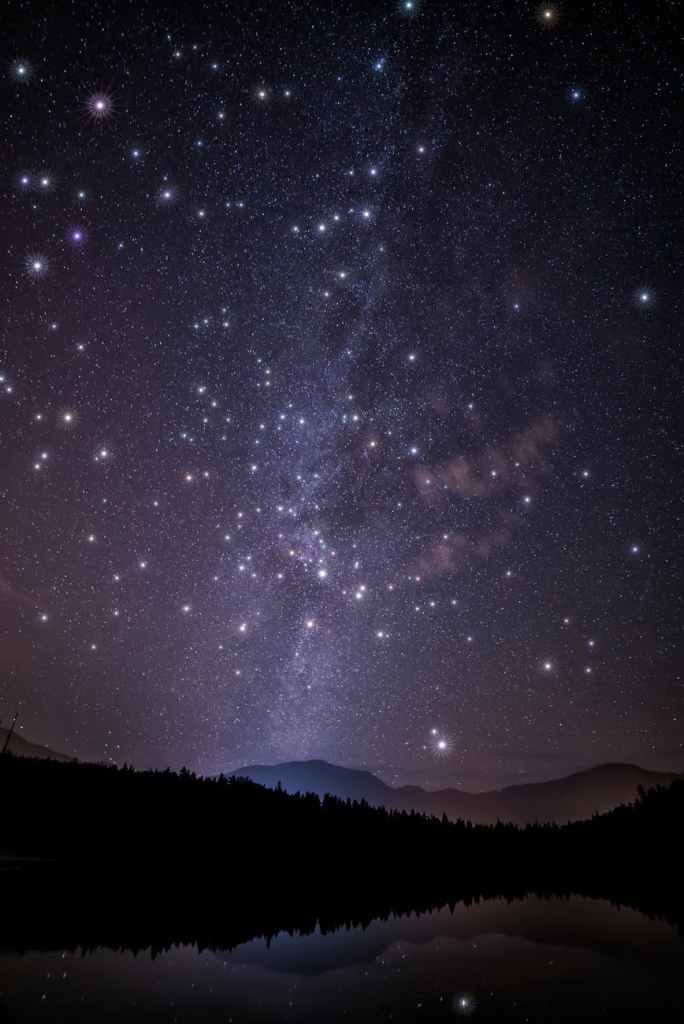
Tell anyone that you are interested in astronomy, and you will very quickly be written off as someone who is too nerdy and not much fun. The word astronomy implies a deep knowledge of difficult maths, physics, and telescope specs not very many would willingly impose on themselves. Astronomy is also very often confused with it’s scientific imposter Astrology, the study that assumes and attempts to interpret the influence of the heavenly bodies on human affairs. Luckily, the dictionary also states that, as a science, Astrology is obsolete, but still many more people are willing to discuss horoscopes and the “predictions” of love and happiness that are written in the stars rather than the fascinating facts about the stars themselves.
Being the world’s oldest science (University of Oregon, 2018), astronomy and astrology were once one and the same. For the greater part of history, only the wealthy could afford to be educated in the sciences, thus leaving the subject in the hands of noble courts and religious institutions, which had derived for themselves religious implications, navigational and practical applications, and a whole mix of superstitions. But now, in the 21st century, with the advancements we have made in thought and discovery, what can the stars tell us? How important is it that we look to them, objects so far away, while we have so many issues here at home, around our very own little star? Luckily for us, we have centuries of knowledge, difficult maths and physics all figured out, and available for us to view online through our laptops, an invention born out of studying the stars (Rosenberg, Russo, Bladon, & Christensen, 2014). But perhaps the most powerful thing that the study of the stars has given us, even more than day to day applications of medicine, navigation, and technology, studying the stars has let us in on a little secret with profound implications: the story of the stars is not a story about stars at all, it’s actually the story of life- the story of us.

Photo by Ali Yasser Arwand on Pexels.com
The night sky has long fascinated the simple and the scholarly. A recent study of European cave art finds that depictions of animals are actually primitive zodiac symbols, some of which are still used today, suggesting that as early as 40,000 years ago, humans were already aware of how to use the stars to record dates of significant events. Though these cave drawings are found in different locations across Europe and span several thousand years, they all use a similar dating method based on a sophisticated understanding of astronomy. There is even a recording of a meteor strike around 15,150 ± 200 BC, which closely corresponds to a climate event recorded in an ice core in Greenland (Sweatman & Coombs, 2018). The study also suggests that the ancient peoples understood the equinoxes, “which occur due to the gradual shift of Earth’s rotational axis on its orbital path”, a discovery usually credited to the Greek Hipparchus around 129 BC, some 15,000 years later (Nguyen, 2018). The Native Americans accurately recorded a supernova explosion which we now know was responsible for the Crab Nebula. They left us a petroglyph of it, a rock drawing, in 1009 AD (University of Oregon, 2018). It is quite moving that the human need to record important dates and events unites us modern people with those from thousands of millennia ago. Just like we take a photo on our phones, or jot a thought into a notebook, they used some pigment, and wrote on cave walls or rocks.
Every people group has developed some kind of cosmology, or explanation for the universe and why it is the way it is. Usually tied in with superstition and religious deities, the ideas ancient cultures had about cosmology were quite imaginative. They sought to explain the origin, structure, and driving force behind the universe (Broadie & Macdonald, 1978). The earliest cosmologies were very magical, or anthropomorphic, the universe was alive, and by giving sacrifices to appease the spirits, humans believed they could sway the unpredictable, all-powerful forces of nature in their favor. They made lunar calendars, built megalithic (big stone) structures, and invested resources to express their ideas about the cosmos. Interestingly, they all came to very similar ideas about the cosmos and our place within it, despite never coming into contact with each other. Mythical cosmology followed (University of Oregon, 2018).
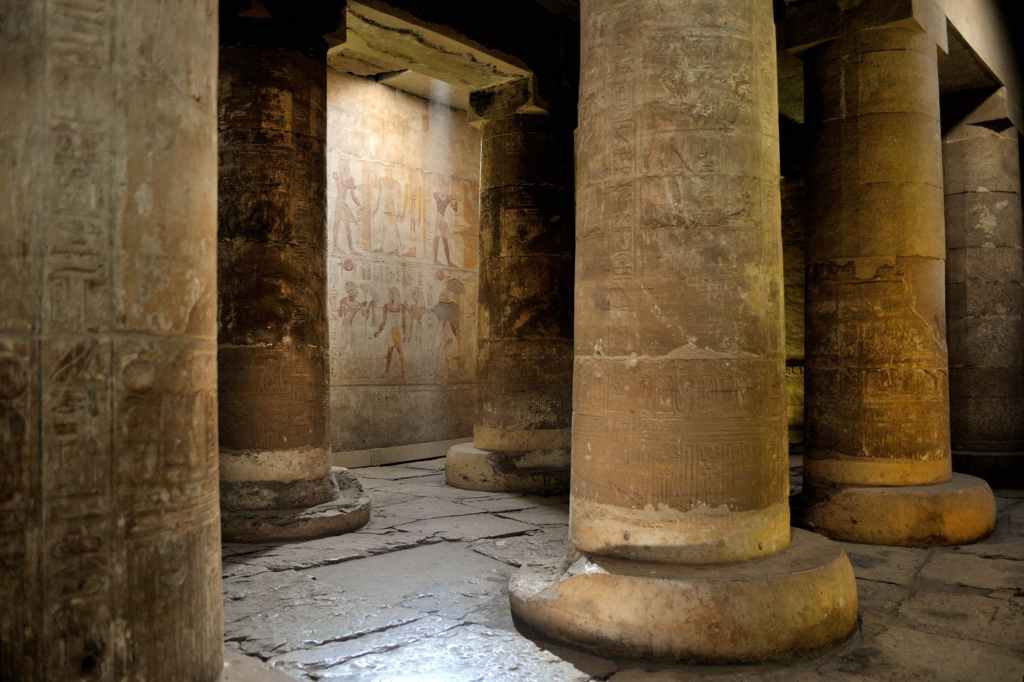
Photo by Roxanne Shewchuk on Pexels.com
In an ancient context, the word myth has a positive connotation. It simply refers to the best current explanation for the world around us, so while myths may be off factually, the truth was often hidden in the essence of the myth itself, in its moral. Though rampant with gods and personifications, myths were, in a very broad sense, the earliest forms of scientific theories. During the bronze age, along with the development of culture, early Egyptian and Mesopotamian cosmology gave rise to a more formalized religion;
Since its principal deities were heavenly bodies, a great deal of effort was made by the priesthood to calculate and predict the time and place of their god’s appearances. These skills led to the division of the day and night into 12 sections each, the development of a lunar calendar, and the development of a solar calendar of 12 30-day months with a special 5-day unit to bring the total to 365 days (University of Oregon, 2018).
Similarly, the Babylonians are credited with detailed and continuous astronomical records, dating back to 800 BC, making them the oldest scientific documents to date. They also invented a few very useful arithmetic tools to help with their predictions and observations. “The purpose of this activity was clearly astrological with the aim of forecasting the fortunes of the country as well as of the king (University of Oregon, 2018).” Ancient China was the first to accurately map the stars above its lands. In 1900, a Taoist priest stumbled upon a hidden library inside of a cave, which had been sealed by Buddhist monks in the 11th century. Among the 40,000 manuscripts was a 4-meter-long scroll which contained the drawing of the entire sky as visible from China, expertly penned by hand with black and red inks. This document, named the Dunhuang Star Chart, was dated to have been made between 649 and 684 AD, while it has no coordinate grid and shares wording with an earlier work from about 300 AD, the Dunhuang Star Chart is the earliest-surviving star chart of the entire northern sky (Qiu, 2009). Around the same time the star chart was created, the Arabic world saw its golden age for science. Spherical trigonometry and algebra were developed to help with accuracy of recording the positions of celestial bodies. In 964 AD, Abd al-Rahman al-Sufi first observed the large Magellanic Cloud and our neighbor galaxy Andromeda (Stirone, 2017), and Abū Ali al-Ḥasan Ibn al-Haytham al-Baṣrī was first to suggest the need to test theories and not just accept them as true on the words of others or on observations alone. He wrote:
A person who studies scientific books with a view to knowing the truth, ought to turn himself into a hostile critic of everything that he studies … if he takes this course, the truth will be revealed to him and the flaws…in the writings of his predecessors will stand out clearly. (Unesco, 2016)

Photo by Suzy Hazelwood on Pexels.com
The Royal Society, a modern fellowship of scientists -founded in 1660- echo this very thought in their motto, “Nullius in verba” meaning “take nobody’s word for it” (The Royal Society, 2019). Another notable scientist of the time was a woman named Fatima al-Fihri. Built in Fez, Morocco in 859 AD, and still functioning to this day, it was the first university in the world. Jewish, Muslim, and Christian scholars came from all over to study philosophy, mathematics, language, and astronomy (Stirone, 2017). There is definitely something to be said about the power of humanity’s common sense of wonder working together to answer the questions that we all ask, regardless of our religious backgrounds: why is there something instead of nothing, and what is that something made of?
Enter: Math.
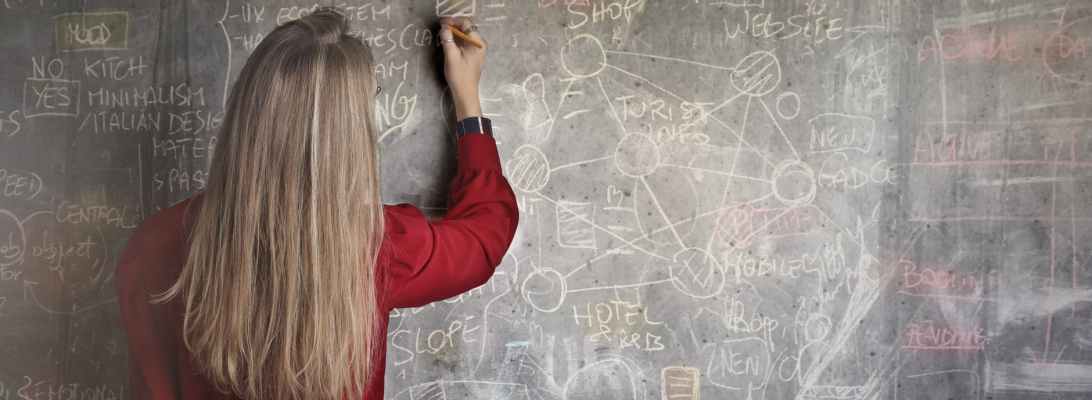
Equally puzzling as it is stunning, math is actually a language, and it helped us understand the universe. Due largely in part to the foundations laid by Greek thinkers like Plato, Pythagoras, and Ptolemy, our understanding continues to grow, and is still best explained by numbers, not words. Two schools of thought dominated the Greek philosophical stage: Platonism and instrumentalism. Platonism stated that the physical world is just a shadow – a representation- of the real world, which consists of pure mathematics, concluding that mathematics was discovered. On the contrary, Aristotle argued for instrumentalism, stating that mathematics was a human invention born out of idealizing and abstracting the true physical world.
Which one of them was right, we may never know, but the fact remains: “mathematics is the chief source of the belief in eternal and exact truth, as well as a sensible intelligible world (University of Oregon, 2018).” Guided by this principle, we are catapulted into the modern scientific age, making discovery after discovery. Copernicus, Galileo, Newton, Einstein, Hawking, Kepler, Hubble, and many more brilliant men and women, fueled by an insatiable curiosity, challenged thought and gave us a cosmology we could have never imagined. To name a few, we have: the theory of gravity, understanding of spacetime, quantum physics, quantum mechanics, the big bang theory, and yet we are only scratching the surface, immediately realizing that the more we know, the more we find out how much we don’t know. Neil deGrasse Tyson, a popular science communicator and accomplished astrophysicist shared this sentiment in a conversation with Stephen Colbert. He said;
We don’t understand the origin of 85% of all of the gravity of the universe. It’s not black holes, it’s not comets, stars, planets, none of the above.’ ‘So the math says there should be more there, but we just can’t see it?’[Colbert] ‘Right, so it’s gravity with no known source…Then -then- there’s some mysterious pressure in the vacuum of space that is forcing the universe to accelerate in its expansion…so this dark energy, in the future, will render the universe so large, having accelerated so significantly, that all of the galaxies of the night sky will have accelerated beyond our horizon[field of view of the observable universe], and all the galaxies are the source of all of our knowledge of cosmology, the big bang, everything we know about the history of the universe comes to us from these galaxies. If they accelerate beyond our horizon, the next generation of cosmic explorers will only have the stars of the Milky Way to think about…there would have been an entire chapter of the universe ripped from their view…so I lose sleep wondering today, was there a previous chapter ripped from the universe itself? And here we are, touching the elephant not knowing that, in fact, there is an elephant standing there…we don’t know what we don’t know… (The Late Show with Stephen Colbert, 2018)
And while there is still so much left to discover, what we do know has given us a remarkable picture of our past, as well as a glimpse into the future of our universe, as dark and star-less as it may be. It all began some 13.8 billion years ago, when something came out of nothing. Weather it truly was nothing is debated to no end, but what we can say for certain is that something happened in the vast void of the unknown, something so spectacular that it’s afterglow can be heard and seen to this day: the background microwave radiation. One simply needs to turn on the TV or radio to some static, and there it is, a tiny percentage of all static is actually radio magnetic radiation left over from the cosmic creation event (Bryson, 2004).
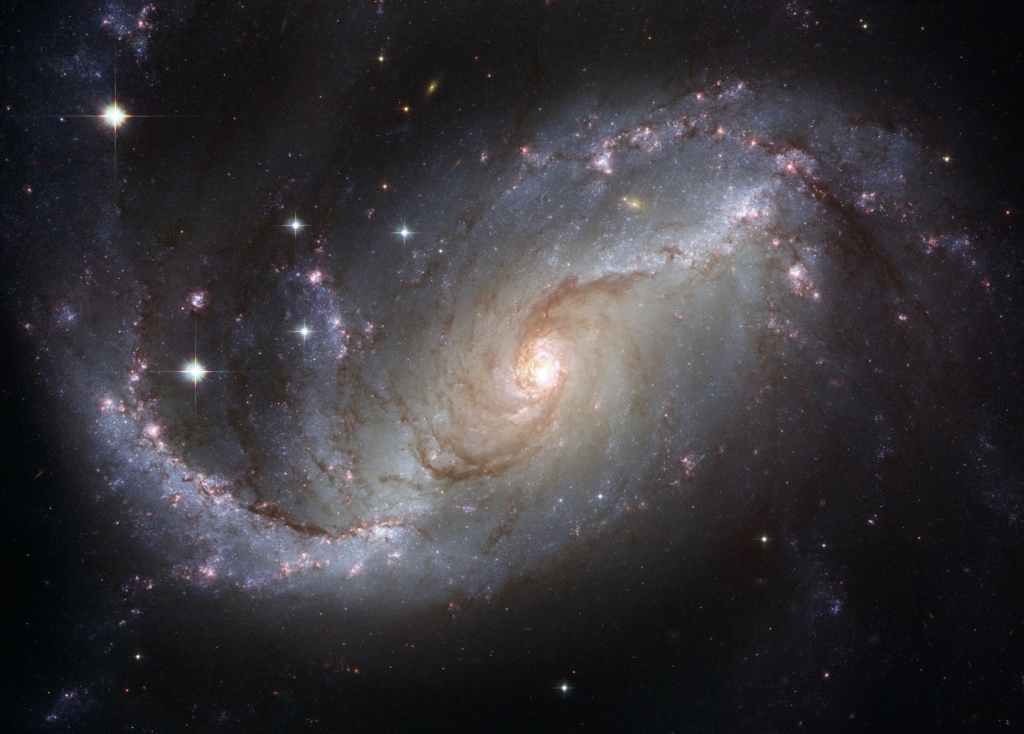
Photo by Pixabay on Pexels.com
The Big Bang created all of the atoms and energy that the universe will ever use, meaning, the same atoms that make us today, were all here since the beginning of time. When the universe was very young, it was hot and dense, in a plasma-like state. It went through a rapid inflation period, which stretched the fabric of spacetime, and effectively caused the plasma to cool. This happened at such a perfect rate, that it allowed for the right conditions for the formation of elements: hydrogen and helium, with trace amounts of lithium and beryllium (New Zealand Government, 2019). This process of element formation continued until there was enough mass to form stars. Stars lit up across the universe, and in time, exploded into spectacular supernova, creating the extreme temperatures needed for the synthesis of elements heavier than iron, like gold and uranium. The explosions then spewed the elemental building blocks of life into the cosmos, allowing for them to collect into clouds of gas and dust, to repeat the process all over again (University of Oregon, 2018).
It is because of these explosions that we are here today. The atoms that make each one of us have been recycled from star to star, until they eventually came together to make each individual person that ever lived, in a combination of atoms that never existed before, and never will again (Bryson, 2004). “We are literally the ashes of long dead stars. When you buy a party balloon that floats in air, it is filled with helium gas – most of which was created when the universe was only 3 minutes old (New Zealand Government, 2019)!”
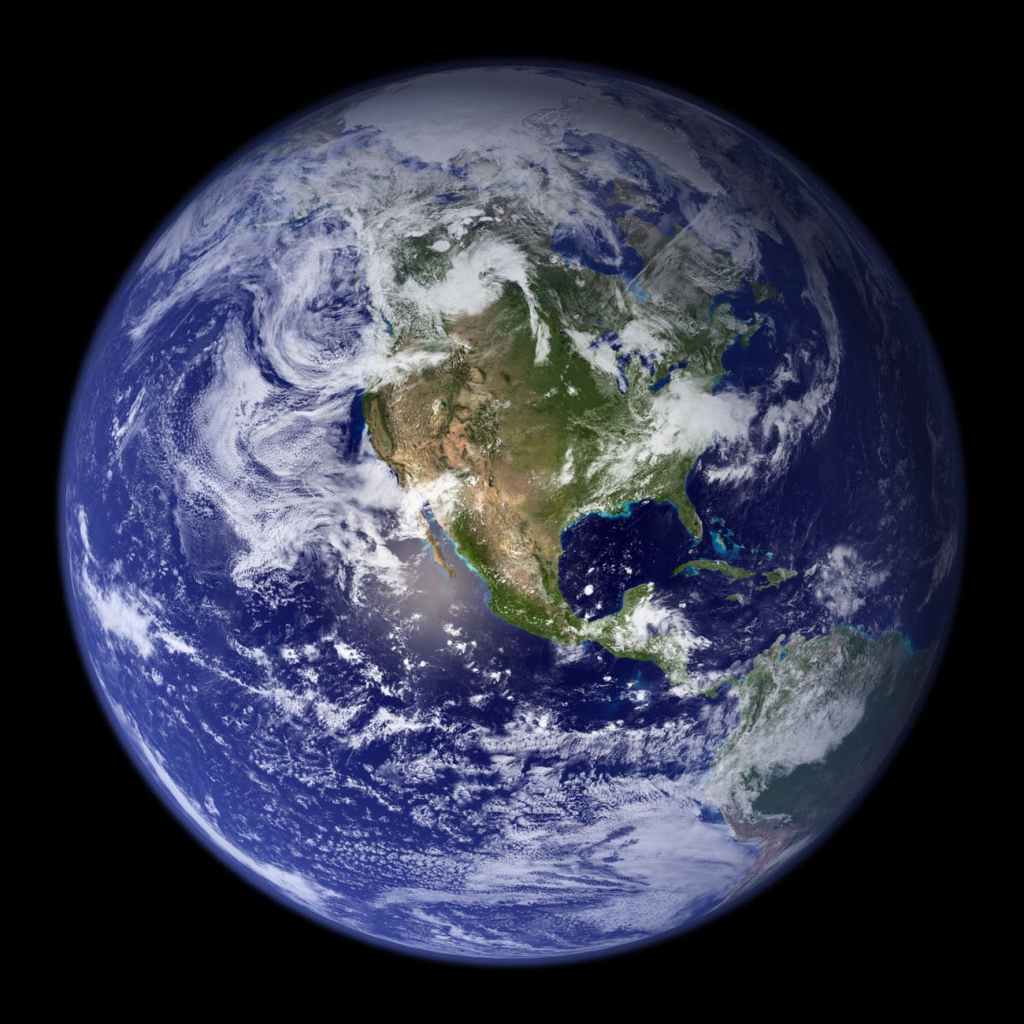
Bae, AKA Earth
It is very humbling to study cosmology and see all the events leading up to our existence unfolding in an almost perfect trajectory. The Big Bang producing the right amount of atoms, the universe expanding at a rate that allowed the formation of elements, our Earth being in the “Goldilocks zone” where it’s not too hot and not too cold, it’s just right for life to thrive. Even the dinosaurs going extinct meant that the smaller animals who survived the asteroid strike had a fighting chance at life, giving rise to mammals, who eventually evolved into the creatures who are able to ask about and ponder these very things: humans.
Despite the plethora of myths, cosmologies, and other things that divide the human race, we are all essentially the universe. On a cosmic scale, we have far more that unites us than that which separates us. Our shared material ancestry tells a story of beauty and unity, while anthropologically, our physical differences serve as a reminder of how creative, and adaptive we can be for a chance at life. Studying the stars leads us to a sense of wonder, a sense of smallness yet importance. Once the Earth was stable enough, life arose relatively quickly, however it is the only place housing life we know of thus far, making it remarkably rare and precious. It’s astounding that something as cut and dry as math and physics could tell us something so deep and integral to the human experience. It has been said that mathematics is the language in which God wrote the universe, and while that may or may not be true, the universe definitely has something to tell us, we just need to look.

Photo by fauxels on Pexels.com
References:
Broadie, A., & Macdonald, J. (1978). The Concept of Cosmic Order in Ancient Egypt in Dynastic and Roman Times. L’antiquite classique, 47(1), 106-128. https://doi.org/10.3406/antiq.1978.1885
Bryson, B. (2004). A Short History of Nearly Everything. New York, NY: Broadway books.
New Zealand Government. (2019). Science Learning Hub. Retrieved November 27, 2019, from https://www.sciencelearn.org.nz/resources/1727-how-elements-are-formed
Nguyen, J. (2018, December 20). Business Insider. Retrieved November 27, 2019, from https://www.businessinsider.com/ancient-cave-drawings-are-constellations-of-stars-2018-12
Qui, J. (2009). Charting the heavens from China. Nature, 459, 778-779.
Rosenberg, M., Russo, P., Bladon, G. & Christensen, L.L. (2014). Astronomy in Everyday Life. CAPjournal, 14, 30-35. Retrieved https://www.iau.org/public/themes/astronomy_in_everyday_life/
Stirone, S. (2017, February 14). Astronomy. Retrieved November 27, 2019, from https://astronomy.com/news/2017/02/muslim-contributions-to-astronomy
Sweatman, M. B., & Coombs, A. (2018). Decoding European Palaeolithic Art: Extremely Ancient knowledge of Precession of the Equinoxes. Athens Journal of History, 5(1), 1-30. doi: doi=10.30958/ajhis.5-1-1
The Late Show with Stephen Colbert. (2018, January 6). The Mystery That Keeps Neil deGrasse Tyson Up At Night [Video file]. Retrieved from https://www.youtube.com/watch?v=TgA2y-Bgi3c
The Royal Society. (2019). History of the Royal Society. Retrieved from https://royalsociety.org/about-us/history/
Unesco. (2016, February 4). S. M. Razaullah Ansari: Ibn al-Haytham’s scientific method. Retrieved November 25, 2019, from https://en.unesco.org/news/sm-razaullah-ansari-ibn-al-haytham-s-scientific-method
University of Oregon. (2018). Astronomy 123: Galaxies and the Expanding Universe. In Ancient Cosmology. Retrieved December 8, 2019, from http://abyss.uoregon.edu/~js/ast123/lectures/lec01.html
University of Oregon. (2018). Astronomy 123: Galaxies and the Expanding Universe. In Medieval Cosmology. Retrieved December 8, 2019, from http://abyss.uoregon.edu/~js/ast123/lectures/lec02.html
University of Oregon. (2018). Astronomy 123: Galaxies and the Expanding Universe. In Nucleosynthesis. Retrieved December 8, 2019, from http://abyss.uoregon.edu/~js/ast123/lectures/lec21.html

 Thought Fossils